Where Ancient Stones Meet Flavor: Olympia’s Hidden Food & Art Trail
You know that feeling when you stumble upon a place so unexpected, it redefines your trip? Olympia, Greece, isn’t just ruins and history—it’s alive with creativity and taste. I wandered into art studios tucked beside olive groves and found chefs turning local honey, thyme, and yogurt into edible art. This is where food becomes culture and every mural tells a story. Forget the typical tourist bites—Olympia’s soul lives in its hidden ateliers and family-run tavernas. The scent of grilled lamb drifts through cobbled lanes, mingling with the earthy aroma of wet clay from a nearby pottery workshop. Here, ancient stones are not relics behind ropes—they are neighbors to living traditions, where the past isn’t preserved under glass but served on plates and shaped by hands that remember.
Beyond the Ruins: Discovering Olympia’s Living Culture
Olympia is best known as the birthplace of the Olympic Games, a sanctuary dedicated to Zeus, and a site of profound archaeological significance. Yet beyond the weathered columns of the Temple of Hera and the worn track of the ancient stadium lies a quieter, equally powerful force: a living culture shaped by generations of artisans who keep tradition alive not in museums, but in their daily work. While many tourists follow the marked paths through the archaeological park, those who wander just beyond the main gates discover a town where history breathes through contemporary expression. Small workshops line the edges of olive-tree-lined roads, their open doors revealing potters shaping clay on spinning wheels, weavers threading looms with natural dyes, and sculptors chiseling stone with focused precision. These are not souvenir factories for mass consumption, but intimate spaces where craft is treated as both legacy and language.
What makes Olympia’s creative scene unique is its deep-rooted connection to place. Artists here do not merely live in a historic town—they draw from it. A ceramicist might carve motifs inspired by ancient amphorae into modern tableware. A painter could reinterpret scenes from Greek mythology using earth pigments harvested from the surrounding hills. These works are not imitations of the past but conversations with it. Many studios participate in the annual Open Ateliers event, held each spring, when creators across the region welcome visitors into their private workspaces. During this time, travelers can watch a sculptor refine a marble bust, listen to a master storyteller recount local legends, or even try their hand at pressing olive oil using traditional stone mills. These experiences transform sightseeing into participation, allowing visitors to touch, taste, and shape a piece of Olympia’s ongoing story.
Family-run workshops are especially common, with skills passed from parent to child over decades. One such atelier, tucked behind a grove of cypress trees, has been crafting hand-thrown pottery for over sixty years. The current generation continues using local clay and wood-fired kilns, producing bowls and vases that echo the forms found in ancient digs yet feel entirely suited to modern homes. These artisans are not isolated figures—they are part of a broader cultural ecosystem that includes local schools, community centers, and seasonal festivals. Their work is often displayed in modest galleries near the town square, where paintings of Mount Kronos at sunset or abstract interpretations of Olympic ideals invite quiet contemplation. By supporting these spaces, travelers contribute to a cycle of cultural continuity, ensuring that Olympia remains not just a destination frozen in antiquity, but a community where heritage evolves.
The Taste of Tradition: How Local Ingredients Shape Olympia’s Cuisine
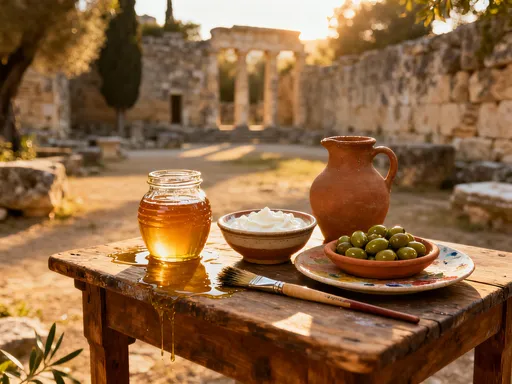
If Olympia’s art is shaped by its landscape, so too is its cuisine. The fertile valleys of the Peloponnese, watered by the Alfeios River and warmed by a Mediterranean sun, produce ingredients of exceptional quality. The region’s food culture is not defined by complexity but by purity—few ingredients, each chosen at its peak, prepared with care. At the heart of this culinary identity is a triad of local treasures: creamy sheep’s milk yogurt, golden thyme honey, and briny Kalamata olives. These are not mere condiments but cornerstones of daily meals, celebrated in both humble homes and refined kitchens.
The yogurt, thick and tangy, comes from small dairies where flocks graze on wild herbs in the hills. Unlike mass-produced versions, this yogurt is often strained in cloth bags for hours, resulting in a dense texture that holds its shape on a spoon. It is served simply, drizzled with honey and sprinkled with crushed walnuts, or used as a base for savory dips flavored with garlic and dill. The honey, harvested from hives placed near thyme-covered slopes, carries the floral, slightly medicinal notes of the plant. Beekeepers in the region still use wooden hives and traditional extraction methods, avoiding artificial heating to preserve the honey’s natural enzymes. This dedication to process ensures a product that is not only delicious but also reflective of the land’s biodiversity.
Equally important is the region’s olive oil, pressed from Kalamata and Koroneiki olives grown in terraced groves that have been cultivated for generations. The oil is typically green-gold in color, with a peppery finish that lingers on the palate. It is used generously—in salads, over grilled vegetables, and as a dip for fresh bread. Lamb, too, plays a central role, often slow-roasted with lemon, oregano, and bay leaves until the meat falls from the bone. These ingredients are not selected at random; their excellence is the result of specific environmental conditions. The altitude, the mineral-rich soil, and the dry summer air all contribute to intense flavors that cannot be replicated elsewhere. This terroir—this sense of place—is what elevates Olympia’s food from mere sustenance to an expression of identity.
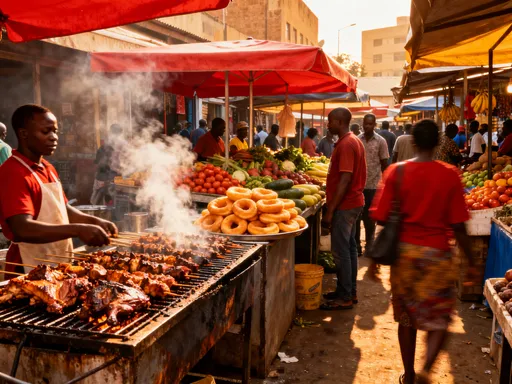
Travelers can experience this culinary richness at local farmers’ markets, which operate on select mornings in the town square. Here, vendors display baskets of figs, tomatoes still warm from the sun, bunches of wild fennel, and wheels of aged feta wrapped in grape leaves. Many chefs source directly from these stands, building their menus around what is fresh and available. The message is clear: in Olympia, food is not separate from the land—it is its most delicious manifestation. By choosing dishes made with local ingredients, visitors do more than enjoy a meal; they participate in a tradition of respect for nature, seasonality, and craftsmanship.
Art Spaces as Culinary Inspiration: When Creativity Meets the Plate
In Olympia, the boundary between visual art and gastronomy is not just blurred—it is often dissolved. Some of the most memorable dining experiences in the region occur in spaces where every element, from the tableware to the menu design, is considered a work of art. It is not uncommon to find a restaurant where the plates are hand-thrown by a local potter, the napkins embroidered with traditional patterns, and the walls adorned with paintings that shift with the seasons. In these environments, eating becomes a multisensory act, where flavor is enhanced by beauty and atmosphere.
One notable example is a family-run eatery located just outside the main village, where the chef collaborates with a ceramicist to create custom serving dishes for special tasting menus. Each course is presented on a unique piece—some glazed in earth tones reminiscent of ancient pottery, others painted with abstract swirls that echo the movement of river currents. The chef explains that the shape and color of the plate influence how diners perceive the food, adding an extra layer of intention to the meal. Even the menu is a work of art, printed on handmade paper with illustrations drawn by a local artist. These details are not mere decoration; they reflect a philosophy that values harmony between form and function, between the hand that crafts and the hand that feeds.
Other venues host live art events alongside dinner service. On certain summer evenings, a courtyard restaurant invites painters to work at easels while guests dine under strings of lanterns. The artwork created during the night is later displayed on the walls or auctioned to support local arts programs. Some chefs go further, designing dishes that visually mimic famous works—such as a dessert that recreates a mosaic pattern using fruit compote and chocolate shards. These culinary-artistic collaborations are not gimmicks; they emerge from genuine relationships between creators who share a commitment to their craft. The result is a dining experience that lingers in memory not just for its taste, but for its emotional resonance.
This fusion also extends to flavor pairings. Inspired by the earthy pigments used in local paintings, one chef developed a risotto colored with saffron and squid ink, served with seared scallops and a drizzle of lemon-infused olive oil. Another created a meze platter arranged to resemble a Greek key pattern, using alternating colors of hummus, beetroot dip, and tzatziki. These presentations invite diners to look closely, to appreciate the care behind each element. In doing so, they elevate eating from routine to ritual, reminding us that food, like art, is meant to be seen, shared, and savored slowly.
Off-the-Beaten-Path Eateries with a Creative Edge
While Olympia has its share of conventional tavernas, the most rewarding meals are often found in lesser-known spots that defy categorization. These are not places that advertise on global booking platforms or compete for Michelin stars. Instead, they thrive on authenticity, personality, and deep ties to the community. Many are run by families who have lived in the region for generations, where the owner might greet you like a relative, the menu changes daily based on what’s available, and the decor reflects a lifetime of collected art and memories.
One such place is a modest restaurant nestled in a stone house with a courtyard filled with potted herbs and hand-painted tiles. The walls are covered in murals depicting scenes from daily life—women harvesting olives, children playing near the river, elders sharing stories under a plane tree. The chef, who also teaches cooking classes, uses recipes passed down from her grandmother, adapting them with modern techniques without losing their soul. Her signature dish—a slow-braised lamb stew with wild greens and lemon—arrives in a clay pot that retains heat, releasing an aroma that fills the entire space. Diners often linger long after the meal ends, sipping herbal tea and listening to live music performed by local musicians.
Another standout is a café run by a sculptor who works in his studio behind the dining area. Guests can watch him shape stone or metal while enjoying a breakfast of honey-drizzled yogurt and freshly baked bread. The tables are made from reclaimed olive wood, each with its own grain pattern and story. The menu is handwritten each morning and includes seasonal specialties like fig and goat cheese salad in late summer or wild mushroom pie in the autumn. What sets this place apart is not just the food, but the sense of intimacy and transparency—visitors feel they are not just customers, but witnesses to a way of life.
For those seeking a deeper connection, a few establishments offer hands-on experiences. A family-run guesthouse with an attached kitchen garden invites guests to pick vegetables, help prepare lunch, and then dine al fresco under a pergola draped with grapevines. These immersive moments create lasting memories and foster appreciation for the labor behind every meal. To find such places, travelers are encouraged to walk beyond the main tourist routes, ask locals for recommendations, and remain open to unexpected discoveries. The best time to visit is late afternoon, when the light softens and many of these venues begin serving dinner. When in doubt, order the house specialty, pair it with a local wine, and let the experience unfold naturally.
How to Experience Olympia Like a Culture-Driven Traveler
Experiencing Olympia in its full depth requires a shift in pace and intention. Rather than rushing through the archaeological site and leaving by midday, a more rewarding approach is to slow down and engage with the rhythms of the town. A suggested itinerary begins with an early morning visit to the ruins, when the light is gentle and the crowds are thin. After exploring the Temple of Zeus and walking the ancient stadium track, travelers can stop at a nearby café for a Greek coffee and a slice of yogurt cake made with local honey.
In the afternoon, the focus shifts to creativity. A self-guided walking tour can include stops at independent galleries, pottery workshops, and textile studios. Many of these spaces are clustered in the old town, making them easily accessible on foot. Some offer short demonstrations or allow visitors to browse finished pieces without pressure to buy. Biking is another excellent option, with quiet country roads leading to family-run farms and olive presses. Local shuttle services also operate during peak seasons, connecting key cultural sites and reducing the need for private car use.
Evenings are best reserved for dining and cultural events. Travelers should aim to eat at venues that emphasize local ingredients and artistic ambiance. Checking local bulletin boards or asking at the tourist office can reveal special happenings—such as a poetry reading in a vineyard, a pottery exhibition in a converted stable, or a seasonal food festival celebrating the olive harvest. These events provide rare opportunities to interact with residents and gain insight into their values and traditions.
Timing the visit around cultural festivals greatly enhances the experience. The annual Olive & Art Festival, held in November, brings together farmers, chefs, and artists for a weekend of tastings, workshops, and live demonstrations. Similarly, the Spring Open Studios event, mentioned earlier, offers behind-the-scenes access to creative spaces usually closed to the public. Travelers who plan around these dates not only enjoy richer programming but also support the local economy at a time when community engagement is strongest. Above all, the key to a meaningful visit is curiosity—asking questions, listening to stories, and approaching each encounter with respect and openness.
Why This Blend of Art and Food Matters for Authentic Travel
In an era of mass tourism, where destinations risk becoming homogenized by global chains and algorithm-driven itineraries, places like Olympia offer a powerful alternative. Here, travel is not about checking off landmarks but about connecting with people, processes, and places on a human scale. When visitors choose to dine at a family kitchen rather than a franchise, or buy a bowl from a local potter instead of a factory-made souvenir, they participate in a form of cultural preservation. These small choices sustain livelihoods, maintain traditional skills, and reinforce community pride.
The impact goes beyond economics. Supporting independent creators helps protect the authenticity of a destination. When art and food are shaped by local hands rather than market trends, they retain their soul. A handmade plate carries the fingerprint of its maker; a stew simmered for hours reflects generations of knowledge. These are not commodities but expressions of identity. By valuing them, travelers help ensure that Olympia does not become a museum piece but remains a living, evolving community.
There is also an emotional dimension to this kind of travel. Studies have shown that experiences involving personal interaction and sensory engagement lead to deeper, more lasting memories. A conversation with a beekeeper, the taste of honey still warm from the hive, the sight of a painter capturing the evening light—these moments stay with us far longer than photographs. They enrich our understanding of the world and remind us of our shared humanity. In choosing to engage with art and food as culture, rather than as entertainment, travelers transform their journey from passive observation to active participation.
Closing: A Call to Savor More Than History
Olympia is more than an archaeological site. It is a living canvas, painted daily by the hands of artists, farmers, and cooks who honor the past while shaping the future. Its ancient stones are not silent relics but neighbors to bustling workshops, fragrant kitchens, and vibrant courtyards where stories are shared over shared meals. To visit Olympia is not just to see history, but to taste it, touch it, and carry a piece of it home in memory.
As you plan your journey, look beyond the guidebook highlights. Seek out the quiet studio where a potter shapes clay with quiet focus. Step into the taverna where the walls tell stories and the food tastes of sun and soil. Let your travels be guided not by checklists, but by curiosity and connection. In doing so, you do more than explore a destination—you become part of its ongoing story. Return not with souvenirs wrapped in tissue paper, but with recipes scribbled on napkins, names remembered, and a renewed belief that the world is still full of places where art and life are inseparable. Savor not just the past, but the present—and let Olympia remind you that the richest journeys are those that feed both body and soul.