Taste of the Wild: How the Smokies Fed My Soul
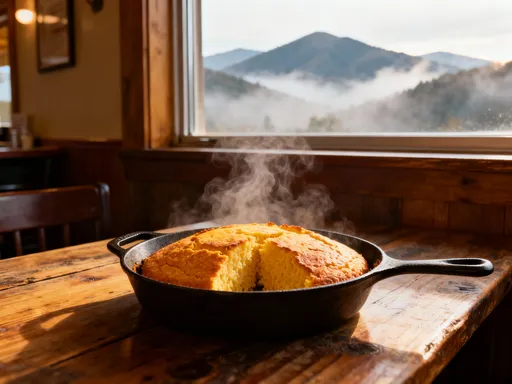
Nestled in the misty folds of the Appalachian range, the Great Smoky Mountains offer more than just scenic trails and wildlife encounters—its food tells a story of heritage, heart, and hearth. From smoky barbecue pits to family-run cabins serving century-old recipes, every bite carries the warmth of Southern tradition. This isn’t just dining—it’s a deep dive into mountain culture, where cast-iron skillets sizzle with history and every meal feels like home. In a world that often prioritizes speed over substance, the Smokies invite travelers to slow down, gather at wooden tables, and rediscover the sacred rhythm of shared meals. Here, food is not a commodity but a language, spoken through flaky cornbread, slow-cooked beans, and honey drawn from hillside hives.
Arrival in the Mountains: First Bites and First Impressions
As the winding roads of Tennessee and North Carolina lead deeper into the Smokies, the air changes—cooler, cleaner, and threaded with the scent of pine and woodsmoke. The first sign of civilization is often a roadside stand, its wooden shelves lined with jars of golden honey, jars of pickled beans, and baskets of ripe tomatoes still dusted with garden soil. In towns like Gatlinburg, Pigeon Forge, and Cherokee, the line between tourist attraction and authentic community life blurs, but the food remains a steadfast marker of place.
Many visitors arrive hungry, drawn by stories of slow-smoked ribs and buttery biscuits. The initial culinary experiences are often found in modest diners where vinyl booths creak under the weight of hearty portions and generations of family stories. One such diner, tucked just off the main strip in Pigeon Forge, serves fried catfish with a side of tart pepper slaw—simple, unpretentious, and deeply satisfying. The waitress calls everyone “honey” and remembers regulars by their usual orders, a small but meaningful sign of belonging.
Yet not all eateries are created equal. Amid the neon-lit souvenir shops and pancake houses designed for volume, there are pockets of culinary authenticity. These are the places where locals gather on Sunday afternoons, where the menu hasn’t changed in decades, and where the cornbread is made with stone-ground meal from a nearby mill. Learning to distinguish between the commercial and the genuine becomes part of the journey—a quiet education in cultural respect and mindful consumption.
The Heart of Mountain Cuisine: Ingredients and Traditions
Appalachian cooking is born of necessity, shaped by centuries of isolation, rugged terrain, and seasonal cycles. The foundation of the mountain diet rests on a few core ingredients: corn, beans, pork, and wild greens. These staples were not chosen for flavor alone but for their ability to sustain life through long winters and lean harvests. Corn, in particular, is more than a crop—it is a cornerstone. Ground into meal, it becomes cornbread, spoonbread, or grits, each variation a testament to resourcefulness.
Pork has long been the protein of choice, preserved through smoking, salting, or rendering into lard. Hogs were practical livestock—efficient eaters, hardy animals, and providers of nearly every part used in cooking. The tradition of “nose-to-tail” eating was not a trend but a necessity, with everything from ham hocks to chitterlings finding their way into stews and side dishes. Even today, the scent of hickory smoke curling from a backyard pit signals more than barbecue—it signals continuity.
Wild greens like ramps, poke sallet, and dandelion add another layer to the mountain palate. Foraged in spring, these plants were once crucial sources of vitamins after months of stored food. Ramps, with their garlicky punch, are still celebrated in local festivals, where communities gather to cook, share stories, and honor the land’s bounty. Preservation techniques like canning, drying, and fermenting allowed families to stretch seasonal abundance into year-round nourishment, a practice that remains alive in home pantries and cellar shelves.
These traditions reflect a deep ethos of self-reliance and sustainability. Long before the phrase “farm to table” entered the mainstream, Appalachian families lived it daily. The mountain kitchen was a place of alchemy, where simple ingredients were transformed through time, care, and generational wisdom. This is not cuisine designed for Instagram—it is food meant to feed, to heal, and to bring people together around a common table.
From Farm to Table: Visiting Local Producers and Markets
One of the most rewarding ways to experience the Smokies’ culinary culture is through its farmers' markets. In towns like Townsend, North Carolina, and Waynesville, these weekly gatherings are more than shopping destinations—they are community events, alive with music, conversation, and the hum of beeswax candles. Stalls overflow with seasonal produce: heirloom tomatoes in jewel tones, bundles of rainbow chard, and baskets of apples so crisp they crack under the teeth.
Artisanal producers play a vital role in preserving regional flavors. A local cheesemaker in Maggie Valley uses milk from grass-fed cows to craft small-batch cheddar, aged in cool, limestone caves. Nearby, a beekeeper offers raw honey infused with wild mountain herbs—each jar labeled with the bloom that shaped its flavor, from sourwood to tulip poplar. These products are not mass-produced; they are labors of love, born from a deep connection to the land.
Conversations with growers reveal a shared commitment to stewardship. One farmer in Haywood County explains how she rotates crops to protect the soil, avoids synthetic pesticides, and saves seeds from her best plants each year. “This land feeds us,” she says, “so we take care of it.” Her stand offers Cherokee purple tomatoes, a variety passed down through generations, now cherished for its rich, smoky sweetness.
These small-scale operations do more than supply fresh food—they strengthen the local economy and preserve biodiversity. By supporting them, visitors contribute to a resilient food system that resists homogenization. Farmers' markets also serve as educational spaces, where children learn to identify vegetables, tourists sample unfamiliar flavors, and elders pass down cooking tips. In this way, the market becomes a living archive of taste, tradition, and ecological wisdom.
Dining with a View: Scenic Restaurants and Elevated Experiences
The Smokies offer dining experiences that merge exceptional food with breathtaking scenery. Perched on ridgelines or nestled in coves, certain restaurants provide panoramic views that elevate the meal into a multisensory event. One such establishment, located near Clingmans Dome, features a wraparound deck where diners watch the fog roll over the treetops like slow waves. The menu changes with the seasons, showcasing ingredients sourced from within fifty miles.
Here, wood-fired trout is served with lemon-thyme butter and a side of roasted fingerling potatoes. Fried green tomatoes, a Southern classic, arrive with a buttermilk ranch dip and a sprinkle of chives. For dessert, the apple-stack cake—layers of thin, spiced apples and buttery pastry—echoes recipes from the 1800s, when apples were one of the few fruits that stored well through winter.
The ambiance is warm but refined: mason jars double as water glasses, pine beams frame the ceiling, and soft bluegrass plays in the background. Service is attentive without being formal, and the staff often shares stories about the farm where the greens were picked or the creek where the trout was caught. This level of transparency enhances trust and deepens appreciation.
Not all scenic dining needs to be formal. A country inn in Cataloochee Valley offers a family-style supper served on long plank tables. Guests sit elbow to elbow, passing bowls of butter beans, skillet cornbread, and collard greens slow-cooked with smoked turkey. The experience feels less like a meal and more like an invitation—a chance to be part of something larger than oneself. In these moments, food becomes ceremony, and the landscape becomes a silent guest at the table.
Campfire Cooking: Meals on the Trail and in the Backcountry
For those who venture beyond paved roads, the Smokies offer a different kind of dining: simple, elemental, and deeply satisfying. Hikers and campers rely on lightweight, nutrient-dense meals, often prepared with dehydrated ingredients or fresh forage where permitted. A typical backcountry dinner might include instant grits with cheese, rehydrated beans, or instant oatmeal enriched with dried fruit and nuts.
Yet even in simplicity, there is ritual. Setting up a camp stove beside a rushing stream, boiling water for coffee, and warming a foil packet of potatoes and onions over the flame—these acts ground the traveler in the present. One evening, near Abrams Creek, a small group of hikers gathered around a fire pit, sharing a meal of grilled trout caught earlier that day. With no spices beyond salt and pepper, the fish tasted pure, almost sacred, its flavor shaped by cold, clean water and open air.
Cooking in the wild is not just about sustenance; it is a form of communion. The crackle of the fire, the scent of pine smoke, the silence between bites—all of it draws attention to the act of eating, transforming it into a mindful practice. In these remote corners, far from restaurants and recipes, food becomes a direct link to nature’s rhythms. It reminds us that we are not separate from the land but part of its cycle.
Regulations in the park prohibit foraging in most areas, a necessary protection for fragile ecosystems. But even within these limits, there is room for connection. Learning to cook with minimal tools, to appreciate the warmth of a shared meal after a long day’s hike, to savor the taste of water filtered from a mountain spring—these are lessons that linger long after the trail ends.
Hidden Gems: Off-the-Beaten-Path Eateries Only Locals Know
Beyond the well-trodden paths lie culinary treasures known only to those who take the time to explore. These are the places without websites, without parking lots, and often without signs. A weathered country store in Cocke County, for example, opens only on weekends and serves breakfast from a single griddle. Its fame rests on two things: buttermilk biscuits so tender they dissolve on the tongue, and sawmill gravy made with real country sausage and pan drippings.
Another hidden spot, a family-run café in a hollow near Robbinsville, offers a daily special written on a chalkboard: pinto beans slow-cooked with ham hock, served with cornbread and a slice of red onion. The owner, a woman in her seventies, greets every guest by name and refills coffee cups without being asked. There is no menu—just whatever was made that morning, based on what’s fresh and what’s needed.
These meals are not curated for tourists; they are part of daily life. Finding them requires patience, curiosity, and a willingness to get lost. A wrong turn down a gravel road might lead to a roadside stand selling apple butter made in a copper kettle, or a church basement hosting a fundraiser dinner with fried chicken, green beans, and banana pudding. These experiences cannot be rushed or scheduled—they unfold in their own time, like the mountains themselves.
For the modern traveler, used to instant gratification and digital convenience, these encounters are a gentle rebuke. They remind us that authenticity is not found in perfection but in imperfection—in the wobble of a homemade pie crust, the uneven fry of a hand-cut potato, the quiet pride of a cook who never trained in a culinary school but learned at her mother’s side.
Preserving the Flavor: How Tourism and Tradition Can Coexist
The growing popularity of the Smokies brings both opportunity and challenge. On one hand, tourism supports local economies, funds conservation efforts, and raises awareness of Appalachian culture. On the other, it risks diluting authenticity, turning tradition into performance. Chain restaurants, themed diners, and mass-produced “homemade” goods threaten to overshadow the real thing—family recipes, small farms, and quiet acts of culinary care.
Yet there are signs of hope. Initiatives like the Southern Appalachian Highlands Conservancy work to protect farmland and heirloom crops. Culinary workshops teach young people traditional skills, from canning to bread-making. Some restaurants now list the names of local farms on their menus, creating transparency and accountability. These efforts reflect a growing understanding that culture is not static—it must be nurtured, adapted, and passed on.
Visitors, too, have a role to play. Choosing to eat at family-owned diners, buying produce from farmers' markets, and asking questions about ingredients are small acts with lasting impact. Respecting local customs—like not foraging in protected areas or supporting businesses that pay fair wages—helps ensure that tourism enriches rather than exploits.
The future of Smoky Mountain cuisine depends on balance: honoring the past without romanticizing it, embracing innovation without losing identity, and welcoming outsiders without sacrificing integrity. It is possible to grow without growing hollow. The mountain table can expand, but only if its foundation—built on humility, hard work, and heart—remains intact.
A Table Set in the Wild
Eating in the Great Smoky Mountains is more than an act of nourishment—it is an act of remembrance, of connection, of belonging. Each meal, whether served on a paper plate at a roadside stand or on fine china at a mountaintop inn, carries the weight of history and the warmth of human hands. The flavors speak of resilience, of seasons turning, of land loved and labored over.
Travelers are invited not just to taste but to listen—to hear the stories behind the stew, the laughter in the kitchen, the quiet pride of a recipe passed from grandmother to granddaughter. In these moments, food becomes a bridge, linking visitor to community, present to past, self to place.
As you plan your journey to the Smokies, let your appetite guide you—not just for flavor, but for meaning. Seek out the quiet tables, the unmarked doors, the hands that grow and cook with care. Support those who keep the traditions alive, and carry their spirit with you when you return home. For the truest souvenirs are not found in gift shops, but in the taste of a biscuit shared with a stranger, the memory of a sunset over the ridge, and the quiet knowledge that somewhere, a fire still burns in a mountain kitchen, waiting for the next traveler to pull up a chair.