Lost in Isfahan’s Hidden Courtyards: A Local’s Secret Paradise
Stepping into Isfahan, most travelers flock to Naqsh-e Jahan Square, and honestly, it’s breathtaking. But beyond the postcard views, I discovered something even more magical—quiet alleyways leading to centuries-old courtyards, untouched by crowds. These hidden scenic spots whisper stories of Persian art, light, and silence. If you’re craving authenticity over checklists, let me take you where guidebooks don’t. Away from the polished tiles and echoing footsteps of grand mosques, there exists a quieter Isfahan—one of dappled shade, murmuring fountains, and time suspended in brick and vine. This is not just a city of monuments, but a living tapestry of intimate spaces waiting to be felt, not just seen.
The Allure of Off-the-Beaten-Path Travel in Iran
Travel has evolved beyond ticking off famous landmarks. Today’s thoughtful explorer seeks connection—moments that linger not in photographs, but in memory. In Iran, a country rich with layered history and deep-rooted hospitality, this shift is especially meaningful. While destinations like Persepolis and Yazd draw well-deserved admiration, the soul of a place often resides not in its grandest halls, but in its quiet corners. Isfahan, a jewel of Persian civilization, exemplifies this duality. The desire to move beyond the expected is growing, driven by a yearning for authenticity, a reprieve from tourist congestion, and a deeper understanding of daily life as it unfolds behind latticed windows and weathered doors.
Exploring off the beaten path in Iran is not about rejecting the iconic—it is about complementing it. When you step away from the central squares and curated museum spaces, you enter a realm where culture is lived, not performed. In these lesser-traveled neighborhoods, time moves differently. Conversations drift from open windows, the scent of saffron and warm bread lingers in the air, and elders sit beneath shaded arcades, sipping tea in unhurried rhythm. This is where travelers begin to understand that beauty in Iran is not only in symmetry and calligraphy, but in the grace of ordinary moments.
Moreover, visiting hidden scenic spots supports a more sustainable form of tourism. By dispersing attention beyond the main attractions, visitors help reduce pressure on fragile historical sites while contributing to local economies in residential areas. Small family-run tea houses, neighborhood artisans, and independent guides benefit directly when travelers choose to wander deeper into the city’s fabric. This kind of tourism fosters mutual respect—between guest and host, observer and participant—and allows for genuine exchanges that transcend language. In seeking the unseen, we not only enrich our own journey but also honor the places we visit.
Isfahan’s Dual Identity: Iconic vs. Hidden
Isfahan is often celebrated for its imperial grandeur—Naqsh-e Jahan Square, a UNESCO World Heritage site, stands as one of the largest and most magnificent city squares in the world. Flanked by the grandeur of Sheikh Lotfollah Mosque, the imposing Ali Qapu Palace, and the bustling bazaar, it is a masterpiece of Safavid urban design. Every tile gleams with intention, every arch calibrated for awe. These sites are undeniably powerful, testaments to a golden age of Persian artistry and engineering. Yet, they represent only one facet of the city’s identity—one that is widely documented, photographed, and replicated in travel brochures.
Beyond this polished surface lies another Isfahan, one that unfolds in narrow lanes, tucked-away gardens, and centuries-old residential homes. This is the Isfahan of private courtyards, forgotten alleyways, and riverside paths where the only footprints are those of locals on morning walks. While the city’s monuments speak of power and devotion, these quieter spaces speak of domestic life, spiritual reflection, and the enduring rhythm of community. They are not less beautiful, only less advertised—hidden not by design, but by the simple fact that they were never meant for mass tourism.
The contrast between the iconic and the hidden is not a rivalry, but a harmony. One cannot fully appreciate the majesty of the grand mosques without understanding the architectural principles that also shape modest homes. The use of light, symmetry, water, and greenery—hallmarks of Persian design—are not reserved for palaces. They are woven into the very structure of everyday life. By exploring both realms, travelers gain a fuller picture of Isfahan’s cultural depth, where beauty is not an exception, but a way of being.
Wandering the Old Quarter: Where Time Slows Down
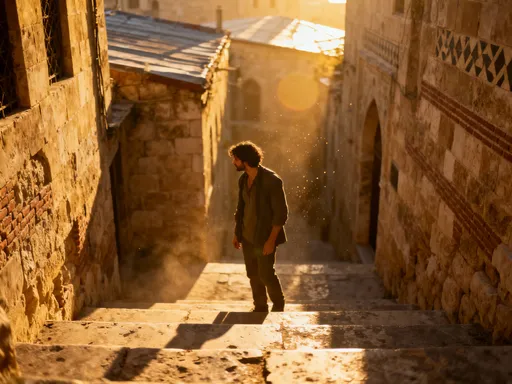
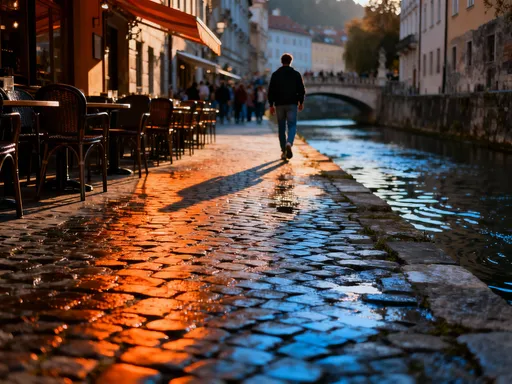
To walk through Isfahan’s old quarter is to step into a different tempo of existence. Neighborhoods like Jolfa, once home to a thriving Armenian community, and the surrounding historic districts offer a glimpse into a city that values preservation not as a tourist strategy, but as a way of life. Here, brick facades weathered by centuries stand beside homes where families have lived for generations. Ivy climbs ancient walls, wooden balconies project over narrow streets, and the occasional stained-glass window catches the afternoon sun, casting kaleidoscopic patterns on stone pathways.
The sensory experience is profound. Morning light filters through plane trees, dappling the cobblestones in shifting patterns. The air carries the faint scent of jasmine from hidden gardens, mingling with the earthy aroma of damp brick after a rare rain. Fountains murmur in private courtyards, their sound spilling into the streets like a quiet invitation. Occasionally, the call to prayer echoes from a distant minaret, not as a disruption, but as a natural part of the city’s rhythm. These are not staged moments—they are the unscripted poetry of daily life.
What makes these neighborhoods so compelling is their authenticity. There are no souvenir stalls or guided tour groups blocking the way. Instead, you might pass an elderly woman tending to potted herbs on her balcony, or hear the soft clink of tea glasses from a family gathering behind a half-open door. Children play quietly in alleyways, and artisans hammer copper in small workshops, their hands moving with practiced ease. In these spaces, travelers are not expected, but when present, they are often met with quiet curiosity and gentle smiles. It is a reminder that travel is not only about seeing, but about being present—about slowing down enough to notice the details that define a place.
Secret Courtyards and Forgotten Gardens
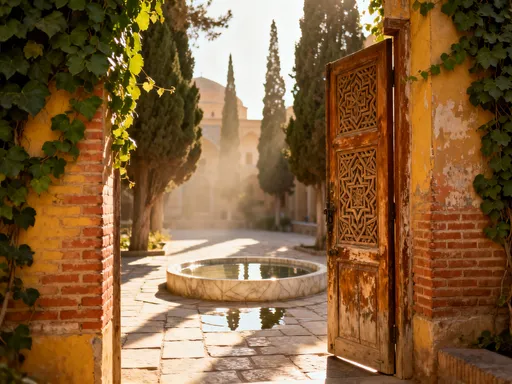
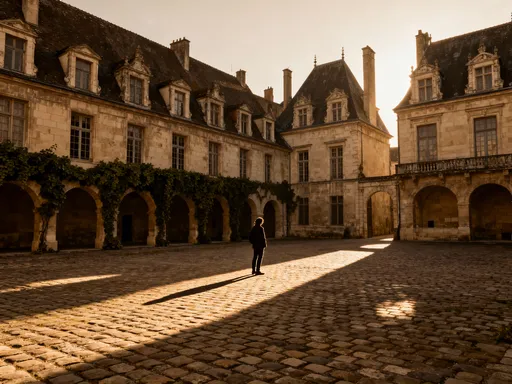
Among the most enchanting discoveries in Isfahan are the traditional Persian houses with inner courtyards—spaces designed around the principles of balance, privacy, and harmony with nature. Many of these homes, some dating back to the 17th and 18th centuries, are tucked behind unassuming doors that reveal entire worlds within. These are not museums, though some have been converted into guesthouses or cultural centers. Others remain private, opening only to invited guests or curious visitors who ask respectfully. To enter one is to step into a sanctuary where architecture and nature coexist in perfect dialogue.
The design of these courtyards follows time-honored principles. The hashti, a covered entrance passage, serves as a transitional space, shielding the interior from the outside world. It creates a moment of pause—light dims, sounds soften, and the visitor is invited to leave the chaos of the street behind. Beyond it lies the dalan, a vaulted corridor that frames a view of the central courtyard, often aligned with a pool or garden. This architectural framing is intentional, guiding the eye and the spirit toward serenity. The courtyard itself, typically rectangular, is surrounded by iwans (vaulted halls) and rooms, with fruit trees, flowering plants, and a central water feature that cools the air and reflects the sky.
What makes these spaces so powerful is their ability to create stillness. In a world of constant noise and motion, the courtyard offers silence—broken only by the trickle of water, the rustle of leaves, or the occasional birdcall. Light plays across tiled walls, shifting with the hours. In the morning, it gilds the eastern arches; by afternoon, it pools in the fountain. These are spaces designed for contemplation, for family gatherings, for tea shared in quiet conversation. They embody the Persian ideal of andaruni—the inner, private realm—where life unfolds away from public view, rich in meaning and connection.
Some of these homes are open to visitors, such as restored historic houses that now function as cultural centers or boutique accommodations. Others remain private, but with polite inquiry and local guidance, access may be granted. The key is respect—understanding that these are not attractions, but living spaces with deep personal and cultural significance. When welcomed, visitors are often offered tea and conversation, a gesture of Persian hospitality that transforms a simple visit into a meaningful exchange.
Hidden Scenic Spots Along the Zayanderud River
The Zayanderud River, which cuts through the heart of Isfahan, has long been a lifeline and a source of beauty. While the Si-o-se Pol bridge draws crowds, especially in the evenings when locals gather to stroll and socialize, quieter stretches of the riverbank offer a more intimate experience. Just a short walk upstream or downstream from the main bridges, the noise fades, and the river reveals its quieter character. Tree-lined paths, shaded by willows and poplars, invite early-morning walks or peaceful afternoons spent reading beneath the branches.
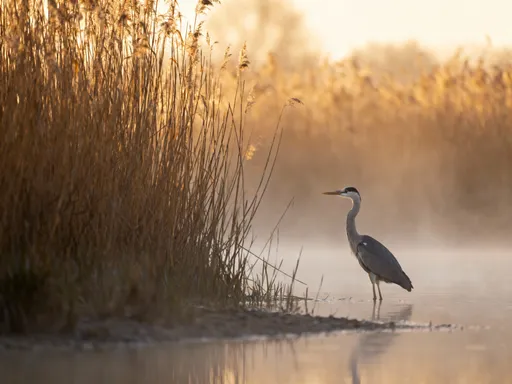
These hidden riverside spots are where Isfahan’s residents come to unwind. Families spread carpets under the trees, sharing simple meals of bread, cheese, and fresh herbs. Elderly couples sit on benches, watching the water flow by. Children chase each other along the paths, their laughter blending with the rustle of leaves. Herons stalk the shallows, and in the early hours, kingfishers dart above the surface. The river, though diminished in flow compared to past decades, still holds a quiet dignity—its surface reflecting the sky, the trees, and the occasional passing cloud.
Seasons shape the river’s character. In spring, the banks burst with color—wildflowers bloom, and the air is thick with the scent of blossoms. By summer, the shade becomes a refuge from the heat, and the sound of water offers a cooling illusion. Autumn brings a different kind of beauty, as golden leaves drift onto the surface, creating fleeting patterns. Even in winter, when the flow slows and the air turns crisp, there is a stillness that feels sacred. These riverside moments are not grand spectacles, but gentle reminders of nature’s presence within the city.
Walking these quieter stretches offers more than scenic views—it fosters a sense of connection to the city’s pulse. Unlike the performative energy of the main bridges, here life unfolds naturally. There are no vendors shouting, no photo shoots blocking the path. Instead, there is a shared understanding of the river as a communal space, one to be enjoyed with quiet appreciation. For the thoughtful traveler, these walks become meditative, a way to absorb the city’s rhythm without intrusion.
Practical Tips for Discovering Isfahan’s Quiet Beauty
Exploring Isfahan’s hidden corners requires more than a map—it demands sensitivity, preparation, and respect. The first step is to approach these spaces not as attractions, but as living environments. Many courtyards and residential areas are private, and entering without permission is inappropriate. The best way to gain access is through a knowledgeable local guide, who can facilitate introductions and ensure cultural norms are honored. Guides from community-based tourism initiatives are especially valuable, as they often support local families and provide authentic insights.
Timing matters. Visiting during weekdays, especially in the mornings, increases the chances of experiencing these spaces in peace. Weekends and holidays bring more local visitors, particularly to popular riverside areas. Early hours also offer the best light for photography and the freshest air for walking. Dressing modestly is essential—long sleeves, loose-fitting pants or skirts, and headscarves for women—not only to comply with local customs, but to show respect for the communities you are entering.
Transportation within the old city is best done on foot or by bicycle. Isfahan has been expanding its network of pedestrian and cycling paths, particularly along the Zayanderud. Renting a bike allows for greater flexibility and access to riverside trails that are less frequented by tourists. Walking, however, remains the most rewarding way to discover hidden details—the curve of a carved stone, the pattern of a forgotten tile, the sound of water behind a wall. Comfortable shoes are a must, as cobblestone streets can be uneven.
When photographing, always ask permission before taking pictures of people or private spaces. While many locals are friendly and open to interaction, it is important to recognize that you are a guest. Carrying a small phrasebook or translation app can help bridge language gaps and show effort to communicate respectfully. Finally, carry water, especially in warmer months, and be mindful of your impact—avoid littering, and support local businesses by purchasing tea, snacks, or crafts from neighborhood vendors.
Why These Hidden Places Matter—And How to Protect Them
The hidden courtyards, quiet alleys, and riverside paths of Isfahan are more than scenic escapes—they are repositories of cultural memory and environmental harmony. They represent a way of life that values privacy, beauty, and connection to nature. In an era of mass tourism and rapid urbanization, these spaces are vulnerable. Increased foot traffic, lack of maintenance, and changing social patterns threaten their integrity. Preserving them is not about freezing them in time, but about ensuring they continue to serve their communities while welcoming respectful visitors.
Mindful tourism is the key. This means traveling with intention—seeking not just novelty, but understanding. It means valuing silence over selfies, observation over intrusion, and local consent over convenience. When visitors approach these spaces with humility, they contribute to their preservation. Every respectful interaction, every small purchase at a family-run tea house, every kind word exchanged with a resident, reinforces the value of these places beyond their aesthetic appeal.
Local initiatives are already working to protect Isfahan’s hidden heritage. Restoration projects, community-led tours, and cultural education programs help sustain both the physical spaces and the traditions they embody. Travelers can support these efforts by choosing responsible tour operators, participating in cultural exchanges, and sharing their experiences in ways that honor the places and people they encountered. Social media, when used thoughtfully, can raise awareness without exploiting intimacy.
In the end, the true soul of Isfahan is not in its grandest monuments, but in its quietest moments—in the play of light on a courtyard pool, in the whisper of leaves along the river, in the warmth of tea offered by a stranger. To seek beauty in stillness is to travel not just with the eye, but with the heart. And in doing so, we do not just visit a place—we become part of its story, even if only for a moment. Let us walk gently, listen closely, and leave behind not footprints, but gratitude.