How I Regained Strength After Injury — Real Talk on Rehabilitation Training
Recovery isn’t just about healing—it’s about rebuilding. After my injury, I learned that rehabilitation training isn’t a shortcut, but a steady path to real health improvement. I faced setbacks, tried methods, and slowly found what worked. This is not medical advice, but a personal look at how consistent, smart training transformed my daily life. You’re not alone in the struggle—progress is possible.
The Hidden Struggle Behind Recovery
When most people think of recovering from an injury, they imagine time passing, rest, and gradual improvement. But for many, the reality is far more complex. After a fall that resulted in a sprained ankle and soft tissue damage, I expected to heal within a few weeks. Instead, I found myself months later still struggling with stiffness, instability, and a persistent fear of moving too quickly. What I didn’t realize then was that healing isn’t passive. The absence of pain doesn’t mean the body is ready. In fact, relying solely on rest can lead to muscle atrophy, joint stiffness, and reduced coordination—setting the stage for longer recovery or even re-injury.
The emotional toll of prolonged recovery is often overlooked. Feelings of frustration, helplessness, and even isolation are common. Simple tasks like walking up stairs or standing for long periods became reminders of what I had lost. I began to question whether I would ever return to the level of activity I once took for granted. Friends would say, “Just give it time,” but time alone wasn’t helping. I felt stuck. It wasn’t until I began working with a physical therapist that I understood the difference between waiting to heal and actively rebuilding. Rehabilitation is not about rushing back to normal—it’s about retraining your body to move safely, efficiently, and with confidence.
Many people mistakenly believe that rest equals recovery. While rest is important in the acute phase, prolonged inactivity can do more harm than good. Muscles weaken, joints lose range of motion, and movement patterns become inefficient. The body adapts to stillness, and returning to activity without proper preparation increases the risk of setbacks. Active rehabilitation, on the other hand, supports tissue healing while maintaining strength, mobility, and neuromuscular control. It’s not about pushing through pain or forcing movement—it’s about guiding the body through a structured, progressive process that honors the healing timeline while encouraging functional improvement.
What Rehabilitation Training Really Is (And Isn’t)
Rehabilitation training is often misunderstood. Some view it as a form of light exercise for the injured, while others confuse it with intense fitness routines designed to “get back in shape fast.” The truth lies in neither extreme. Rehabilitation is a science-based process focused on restoring function, not performance. Its primary goal is not to build muscle mass or burn calories, but to re-establish proper movement patterns, improve joint stability, and retrain the nervous system to coordinate movement safely. This distinction is critical—rehab is not fitness disguised as therapy, nor is it a one-size-fits-all set of stretches.
At its core, rehabilitation is about re-education. After an injury, the body often compensates by shifting movement to unaffected areas. For example, after a knee injury, a person might lean more on the opposite leg, altering gait and placing stress on the hips and lower back. These compensatory patterns can persist long after the original injury has healed, leading to secondary issues. Rehabilitation addresses these imbalances by identifying faulty movement mechanics and correcting them through targeted exercises. These may include controlled range-of-motion drills, neuromuscular activation, and proprioceptive training—all designed to rebuild confidence in movement.
Three core principles define effective rehabilitation: progression, consistency, and professional guidance. Progression means starting with simple, low-intensity movements and gradually increasing complexity as the body adapts. Jumping too quickly into advanced exercises can overwhelm healing tissues and lead to setbacks. Consistency ensures that the nervous system and muscles retain new movement patterns. Unlike a typical workout, where skipping a day may not matter much, rehabilitation relies on repetition to rewire motor pathways. Finally, professional guidance ensures that exercises are appropriate, performed correctly, and adjusted based on progress. A physical therapist can spot subtle errors in form that could undermine recovery, making their role indispensable.
Why the Mindset Shift Matters Most
One of the most transformative moments in my recovery was not a physical milestone, but a mental one. I stopped asking, “When can I go back to normal?” and started asking, “How can I rebuild stronger?” This shift in perspective changed everything. Initially, my focus was on returning to the life I had before—the same routines, the same pace, the same expectations. But injury forced me to confront the fact that my body had changed, and so must my approach. Instead of viewing rehabilitation as a temporary detour, I began to see it as an opportunity to build a more resilient foundation.
Impatience is one of the biggest obstacles in recovery. We live in a culture that values speed and instant results, but healing doesn’t follow a linear timeline. There were days when I felt worse after a session, not better. Moments when progress seemed invisible. It was easy to feel discouraged, especially when comparing myself to others or to my former self. Fear of re-injury also loomed large. Every twinge or unfamiliar sensation triggered anxiety. But over time, I learned to reframe these experiences. Discomfort wasn’t always a warning sign—it could also mean adaptation. Setbacks weren’t failures—they were feedback.
Tracking small wins became a crucial part of maintaining motivation. Instead of focusing solely on big goals like “running a mile” or “lifting a certain weight,” I celebrated smaller victories: being able to stand on one leg for 30 seconds, walking without a limp, or simply sleeping through the night without pain. These moments, though subtle, signaled real progress. They built confidence and reinforced the belief that effort leads to change. Over time, this mindset fostered long-term commitment. I wasn’t just doing exercises—I was investing in my body’s future. The process became less about fixing something broken and more about nurturing strength, awareness, and resilience.
The Daily Framework That Changed My Recovery
Structure was the game-changer in my rehabilitation journey. Without a clear routine, it was too easy to skip sessions, overdo it on good days, or lose focus. I worked with my physical therapist to create a daily framework that was flexible enough to adapt to how I felt, yet consistent enough to ensure progress. It wasn’t rigid or time-consuming—just 20 to 30 minutes a day—but it became non-negotiable, like brushing my teeth. The framework followed a simple three-part structure: warm-up, targeted exercises, and cooldown.
The warm-up was never skipped. It typically included gentle joint mobilizations, light cardiovascular activity like marching in place, and diaphragmatic breathing. This wasn’t just about preparing the muscles—it was about signaling to the nervous system that movement was safe. Breathing deeply and rhythmically helped reduce tension and improve focus. From the very first session, I was taught to pay attention to how my body felt, not just what I was doing. This emphasis on body awareness transformed rehabilitation from a checklist into a mindful practice.
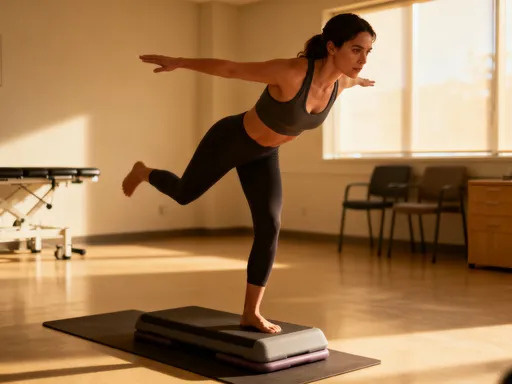
The core of each session consisted of targeted exercises tailored to my specific needs. These were not random movements but carefully selected drills designed to address weaknesses, improve stability, and retrain coordination. For example, I practiced single-leg balance on a foam pad to enhance proprioception, performed controlled step-ups to rebuild quadriceps strength, and used resistance bands for glute activation. What mattered most was not how many repetitions I could do, but the quality of each movement. My therapist emphasized form over speed, control over intensity. A slow, deliberate squat with perfect alignment was more valuable than ten rushed ones with poor mechanics.
The cooldown phase included gentle stretching, self-massage with a foam roller, and a brief body scan. This was a time to reflect on how the session went—where I felt tension, where I noticed improvement, and what needed adjustment. Over time, this daily ritual became more than physical training. It was a moment of connection with my body, a space to listen, learn, and appreciate progress, no matter how small. The consistency of this framework created momentum. Even on days when I didn’t feel like moving, showing up for just ten minutes kept the process alive.
How Professional Guidance Made the Difference
While it’s tempting to rely on online videos or generic exercise programs, my experience taught me that professional guidance is irreplaceable. A physical therapist didn’t just give me a list of exercises—they observed how I moved, corrected my form in real time, and adjusted the program based on my feedback. They noticed things I couldn’t: a slight shift in weight distribution, a hesitation in movement, or a muscle that wasn’t firing properly. These subtle cues are often the difference between effective rehabilitation and unintentional compensation.
Self-diagnosing or copying workouts from social media can lead to serious setbacks. I tried it early on, searching for “knee rehab exercises” and following routines that looked impressive but weren’t right for my condition. Within days, I experienced increased swelling and discomfort. What I didn’t know was that certain movements were placing stress on healing tissues or reinforcing poor movement patterns. A qualified therapist, on the other hand, conducts a thorough assessment and creates a personalized plan based on diagnosis, stage of healing, and individual goals. They also know when to progress, when to hold back, and when to refer to other specialists if needed.
Communication is a key part of working with a healthcare professional. I learned to describe my symptoms clearly—not just “it hurts,” but where, when, how intense, and what makes it better or worse. This helped my therapist make informed decisions about my care. I also asked questions: Why this exercise? What should I feel? How do I know if I’m doing it right? These conversations deepened my understanding and made me an active participant in my recovery. Professional guidance doesn’t mean losing control—it means gaining knowledge, support, and accountability.
Progress Over Perfection: Measuring What Actually Matters
In a world obsessed with metrics—steps, reps, calories, pounds—it’s easy to judge recovery by numbers alone. But in rehabilitation, the most meaningful progress often happens off the scale. For me, true improvement wasn’t measured in how much weight I could lift, but in how I moved through my day. Could I stand in the kitchen preparing dinner without shifting my weight? Could I play with my children without fear of falling? Could I walk up a flight of stairs without holding the railing? These functional gains were far more significant than any number on a chart.
Sleep quality improved long before strength did. I began to notice that after consistent sessions, I fell asleep faster and woke up feeling more rested. Energy levels increased, not because I was doing more, but because my body was moving more efficiently. Pain decreased not suddenly, but gradually—first in duration, then in intensity. These changes were subtle, but they added up. Journaling helped me see patterns I might have otherwise missed. I tracked mobility milestones, like being able to squat down to pick something up, as well as mental clarity and mood. On days when I felt discouraged, looking back at my notes reminded me how far I’d come.
Adjusting goals based on real feedback, not expectations, was essential. There were times when I had to scale back—not because I was failing, but because my body needed more time. Healing isn’t a race, and comparing myself to a timeline only created unnecessary pressure. Instead, I learned to honor my body’s signals. If an exercise caused sharp pain or increased discomfort the next day, it was a sign to modify, not push through. Goals evolved as I progressed, becoming more specific and meaningful. From “reduce pain” to “walk three miles without assistance,” each new target reflected a deeper level of function and confidence.
Turning Rehab Into a Lifelong Health Habit
What began as a necessity—rehabilitation after injury—eventually became a cornerstone of my long-term wellness. The principles I learned didn’t end when my pain disappeared. They became integrated into my daily life. I now pay attention to my posture while sitting, engage my core when lifting groceries, and take short movement breaks during long periods of stillness. These aren’t chores—they’re acts of care. Rehabilitation taught me to listen to my body, respect its limits, and respond with intention.
Movement quality matters more than quantity. I no longer measure fitness solely by how hard I can push, but by how well I move. This shift has reduced my risk of future injuries and improved my overall sense of well-being. I’ve also become more proactive about preventive care. Regular check-ins with my physical therapist, even when I feel fine, help catch small imbalances before they become problems. It’s like maintenance for a car—routine attention prevents major breakdowns.
Recovery isn’t the end of the journey—it’s the beginning of a stronger, more aware way of living. The injury was a setback, but it also became a catalyst for change. It forced me to slow down, pay attention, and rebuild with purpose. I now see rehabilitation not as something you do after you’re hurt, but as a mindset—a commitment to moving well, feeling strong, and living fully. If you’re in the middle of your own recovery, know this: progress is possible. It may be slow, it may be frustrating, but every small step counts. You’re not just healing. You’re becoming stronger than before.