How I Regained My Balance After Injury – Real Talk from My Rehab Journey
Balance isn’t something most people think about—until they lose it. After my injury, even standing without wobbling felt like a challenge. That’s when I discovered how crucial balance training really is in rehabilitation. It’s not just about strength; it’s about retraining your body and mind to work together. I started with simple moves, felt shaky at first, but gradually noticed real improvements. This is my story—and how you can benefit too, whether recovering or just wanting better stability.
The Moment I Knew Something Was Off
It happened on an ordinary Tuesday morning. I slipped on a wet kitchen floor and landed hard on my hip. At first, I thought it was just a minor bruise. I could walk, so I assumed everything was fine. But in the days that followed, I began to notice something unsettling: I couldn’t stand on one leg to tie my shoe without swaying. Reaching for a high shelf made me feel unsteady. Even walking across a room sometimes left me gripping the wall for support. The injury had disrupted more than just my hip—it had thrown off my entire sense of balance.
The emotional toll was just as heavy as the physical one. I had always considered myself independent and capable. Now, I found myself afraid of falling again. I avoided stairs. I hesitated before stepping off curbs. Simple errands like grocery shopping became sources of anxiety. I didn’t want to admit how much I was struggling, but my confidence was slipping away as quickly as my balance had.
What I didn’t realize at the time was how deeply balance is woven into everyday life. It’s not just about staying upright—it’s about moving safely, confidently, and efficiently. From getting out of bed to walking the dog, nearly every action relies on subtle, automatic adjustments your body makes without you noticing. When that system is disrupted, even the most routine tasks become obstacles. I had taken my balance for granted, and now I was paying the price.
Why Balance Matters More Than You Think
Beyond the obvious risk of falling, poor balance affects overall mobility, coordination, and independence—especially during recovery. Many people assume balance is only important for athletes or older adults, but the truth is, it’s a foundational skill for everyone. It’s what allows you to pivot quickly when you hear a noise behind you, step over a threshold without tripping, or stand steadily while holding a heavy pot. Without reliable balance, daily life becomes a series of calculated risks.
Balancing is not just a physical act—it’s a complex coordination of three key systems in the body. The first is the vestibular system, located in the inner ear, which detects motion and spatial orientation. The second is vision, which provides visual cues about your environment. The third is proprioception, often called the “sixth sense,” which allows your body to know where its limbs are in space without looking. These systems constantly communicate with your brain, making tiny adjustments to keep you stable.
When one of these systems is compromised—such as after an injury to a joint or muscle—the brain receives incomplete or conflicting information. This can lead to dizziness, instability, or delayed reactions. Studies show that impaired balance significantly increases the risk of falls, particularly during rehabilitation when strength and coordination are still returning. For someone recovering from a fall or surgery, this creates a dangerous cycle: fear of falling leads to reduced movement, which weakens muscles and further impairs balance.
Rebuilding balance isn’t about regaining strength alone—it’s about retraining the brain-body connection. The good news is that this system is adaptable. With consistent, targeted exercises, the nervous system can learn to compensate for weaknesses and improve stability over time. That understanding became the foundation of my recovery journey.
My First Steps in Rehab: What Actually Helped
My first appointment with a physical therapist was both reassuring and humbling. Instead of jumping into exercises, we began with an assessment. The therapist asked me to stand with my feet together, then progress to a tandem stance—heel to toe—and finally attempt a single-leg stand. I couldn’t hold the last position for more than a few seconds. I swayed dramatically, my arms flailed, and I felt a wave of embarrassment. But the therapist remained calm and professional, explaining that these were normal reactions after an injury.
The assessment wasn’t meant to judge me—it was designed to identify specific weaknesses. We discovered that my proprioception in the injured leg was diminished, and my core muscles weren’t engaging properly to stabilize my posture. These findings helped shape a personalized plan focused on rebuilding neuromuscular control. The exercises weren’t flashy or intense, but they were precise and purposeful.
We started with basic weight-shifting exercises—rocking forward and back, side to side, in a slow, controlled manner. I practiced standing with my feet close together, gradually reducing my base of support. The tandem stance came next, where I lined up one foot directly in front of the other. Each movement was done near a counter or chair so I could steady myself if needed. At first, I felt frustrated by how difficult these simple tasks were. I expected progress to be faster, but my therapist reminded me that healing is not a race.
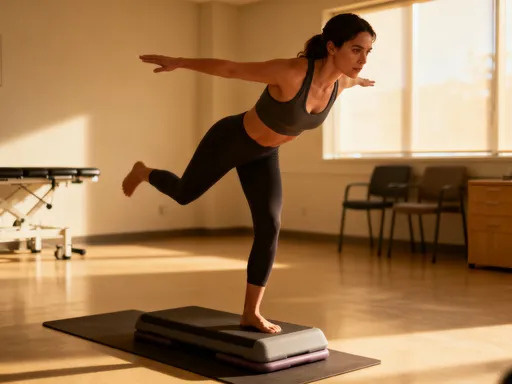
Then came my first real win: holding a single-leg stand for 15 seconds without support. It didn’t seem like much, but in that moment, I felt a flicker of hope. My body was responding. My brain was relearning. That small success became a turning point—it proved that improvement was possible, even if it was gradual. From then on, I approached each session with more patience and less self-criticism.
Building a Routine That Works—No Gym Needed
One of the most empowering parts of my recovery was learning that I didn’t need special equipment or a gym membership to make progress. Balance training can be done at home with minimal space and no cost. My therapist helped me design a simple daily routine that I could stick to, even on busy or low-energy days. The key was consistency—not intensity.
I started with five minutes a day, gradually increasing to 15 as my confidence grew. I did exercises in the morning while waiting for my coffee to brew or in the evening while watching the news. The routine included a mix of static and dynamic movements. I practiced the heel-to-toe walk along a straight line on my living room floor, focusing on keeping my arms at my sides and my gaze forward. I stood on a folded towel or cushion to challenge my stability, simulating uneven surfaces. I also tried standing with my eyes closed for short periods, which heightened my reliance on proprioception.
Another helpful exercise was the clock reach. I imagined standing in the center of a clock face and slowly reached one foot out to touch different numbers—3 o’clock, 6 o’clock, 9 o’clock—while balancing on the other leg. This improved my control in multiple directions and mimicked real-life movements like stepping sideways to avoid an obstacle. I used a chair for support at first, then gradually reduced my hand contact until I could do it independently.
What made the biggest difference wasn’t any single exercise—it was showing up every day. There were days I felt steady and strong, and others when I wobbled more than usual. But over time, the good days outnumbered the shaky ones. I learned to celebrate small victories: holding a pose a few seconds longer, needing less hand support, or walking through the house without grabbing the walls. These tiny gains added up to real, lasting change.
Beyond Standing Still: Dynamic Balance for Real Life
As my static balance improved, my therapist introduced dynamic exercises—movements that involved shifting weight while in motion. This was the next level of training, designed to prepare me for the unpredictable nature of daily life. Standing still is one thing, but real-world stability means being able to move safely across different terrains, change direction quickly, and recover from unexpected shifts.
We practiced stepping over low objects like rolled-up towels or small books, simulating curbs or door thresholds. I worked on controlled turns—pivoting 90 and 180 degrees while maintaining balance. We also incorporated uneven surfaces, using foam pads or grassy patches in the yard to challenge my adaptability. These activities felt more relevant than standing in one place because they mirrored real challenges I’d face outside the therapy room.
One of the most confidence-boosting exercises was walking on different surfaces: carpet, tile, grass, and gravel. Each required subtle adjustments in foot placement and muscle engagement. I learned to trust my body’s ability to adapt. My therapist emphasized the importance of head position—keeping my gaze forward rather than looking down at my feet—because it improved spatial awareness and reduced the risk of tripping.
For those at different fitness levels, these exercises can be modified. Someone just starting out might use two hands on a support, take smaller steps, or practice on flat, even ground. More advanced individuals can add arm movements, close their eyes briefly, or increase speed. The goal is not perfection but progress—building the ability to move with control and confidence in real-world situations.
When to Push and When to Pause
Progress in balance training isn’t always linear. There were days when I felt stronger and more coordinated, and others when I regressed—feeling wobbly, disoriented, or fatigued. Learning to recognize the difference between productive challenge and potential harm was one of the most important lessons of my rehab journey.
It’s essential to push yourself enough to stimulate improvement, but not so much that you risk injury. Warning signs like dizziness, sharp pain, or excessive shakiness mean it’s time to stop and reassess. I learned to listen to my body rather than push through discomfort. My therapist reminded me that rest and recovery are part of the process—overtraining can delay healing, not speed it up.
Professional guidance is especially important during recovery. While many balance exercises are safe to do at home, a physical therapist can ensure you’re using proper form and progressing at the right pace. They can identify compensatory movements—like leaning too much on one side or holding your breath—that might seem minor but can lead to long-term imbalances if uncorrected.
Setbacks don’t mean failure. There was a week when I lost momentum after a flare-up of pain. I felt discouraged, but my therapist helped me reframe it: healing is not a straight line. What mattered was returning to the routine, even if I had to scale back temporarily. Patience, self-compassion, and persistence were just as important as the exercises themselves.
Long-Term Gains: Stability That Sticks
Months into my routine, the changes became undeniable. I could walk through the house without support. I climbed stairs without hesitation. I even returned to gardening, kneeling and standing without fear. But beyond the physical improvements, the most profound shift was in my confidence. I no longer felt fragile or afraid. I trusted my body to move safely and respond appropriately to challenges.
Improved posture was another unexpected benefit. As my core strength and balance improved, I naturally stood taller and moved with more grace. Friends noticed, commenting that I seemed “lighter on my feet.” Coordination improved too—reaching for items, turning quickly, or stepping off a curb became effortless again. These subtle changes enhanced my overall quality of life in ways I hadn’t anticipated.
Beyond recovery, balance training has become a lifelong habit. I continue to do short exercises daily, not because I have to, but because I want to. I see it as an investment in long-term health and independence. Falls are a leading cause of injury in adults, and maintaining good balance is one of the most effective ways to prevent them. It’s not just about healing—it’s about thriving.
Balance is more than a physical skill; it’s a form of self-care. It teaches patience, presence, and resilience. It reminds us that progress often comes in small, quiet steps. And it proves that even after injury, the body has an incredible capacity to heal and adapt—when given the right tools and time.